
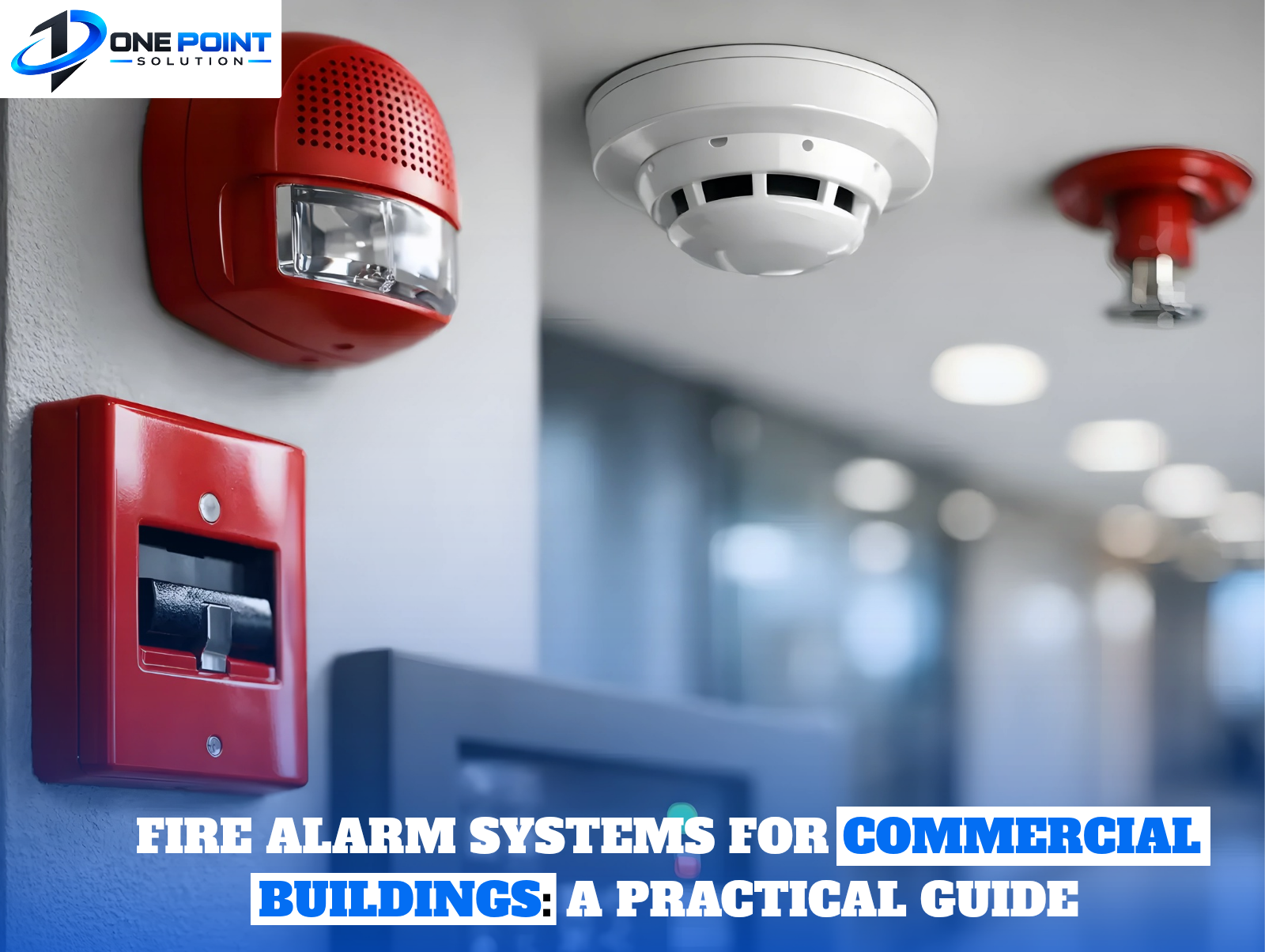
Fire Alarm Systems for Commercial Buildings: A Practical Guide
Key questions for businesses preparing to discuss fire detection and alarm coverage.
Published by One Point Solution | Fire Safety & Detection
Fire alarm systems help alert occupants to a potential fire so that appropriate emergency procedures can begin. Commercial buildings vary in layout, occupancy and daily operations, so system planning should reflect the premises rather than rely on a generic device list. Equipment selection and installation should be guided by qualified professionals and applicable requirements.
Start With the Building Layout
The number of floors, room arrangement, circulation routes, occupied areas and building use all influence fire detection and alarm planning. A site review helps identify relevant areas and questions that need to be resolved before a system is specified.
- Review the building layout and how spaces are used.
- Identify occupied areas and important circulation routes.
- Discuss changes in occupancy or building use.
- Confirm applicable fire safety requirements with qualified professionals.
Understand Detection and Notification Needs
Different spaces can have different environmental conditions and detection requirements. The choice and location of devices should be determined according to the premises, relevant standards and the system design. Alarm notification should also be considered in relation to the people who need to receive and respond to warnings.
Planning for Commercial and Industrial Premises
Offices, retail spaces, warehouses and industrial buildings do not necessarily share the same risks or operating conditions. The planning process should consider the nature of the activities, the building arrangement and any special site requirements. Avoid selecting equipment before these factors have been assessed.
Testing and Ongoing Maintenance
A fire alarm system requires appropriate commissioning, testing and maintenance. The responsible parties should understand the testing schedule, reporting process, maintenance responsibilities and steps to take when a fault is identified. Follow the system manufacturer's instructions and applicable local requirements.
Choosing a Fire Alarm Installation Provider
Ask potential providers to explain the proposed coverage, equipment, installation scope and ongoing support. Clarify which requirements have been assessed, what remains subject to confirmation and what documentation will be provided after installation.
Frequently Asked Questions
Fire alarm requirements vary by premises, occupancy and applicable regulations.
- Which fire alarm system is suitable for my building? The answer depends on the building layout, usage and applicable requirements.
- Does every building need the same detectors? No. Device selection and placement depend on the site and system design.
- Does a fire alarm system need testing? Yes. Testing and maintenance should follow manufacturer guidance and applicable requirements.
- Can I receive a quotation before installation? A provider can discuss the project, but a reliable proposal may require site information or an assessment.
Discuss Your Security Requirements
Every property has different security needs. Contact One Point Solution to discuss your site, explore suitable options and request a quotation based on your requirements.